
Sculpture by David Pearce
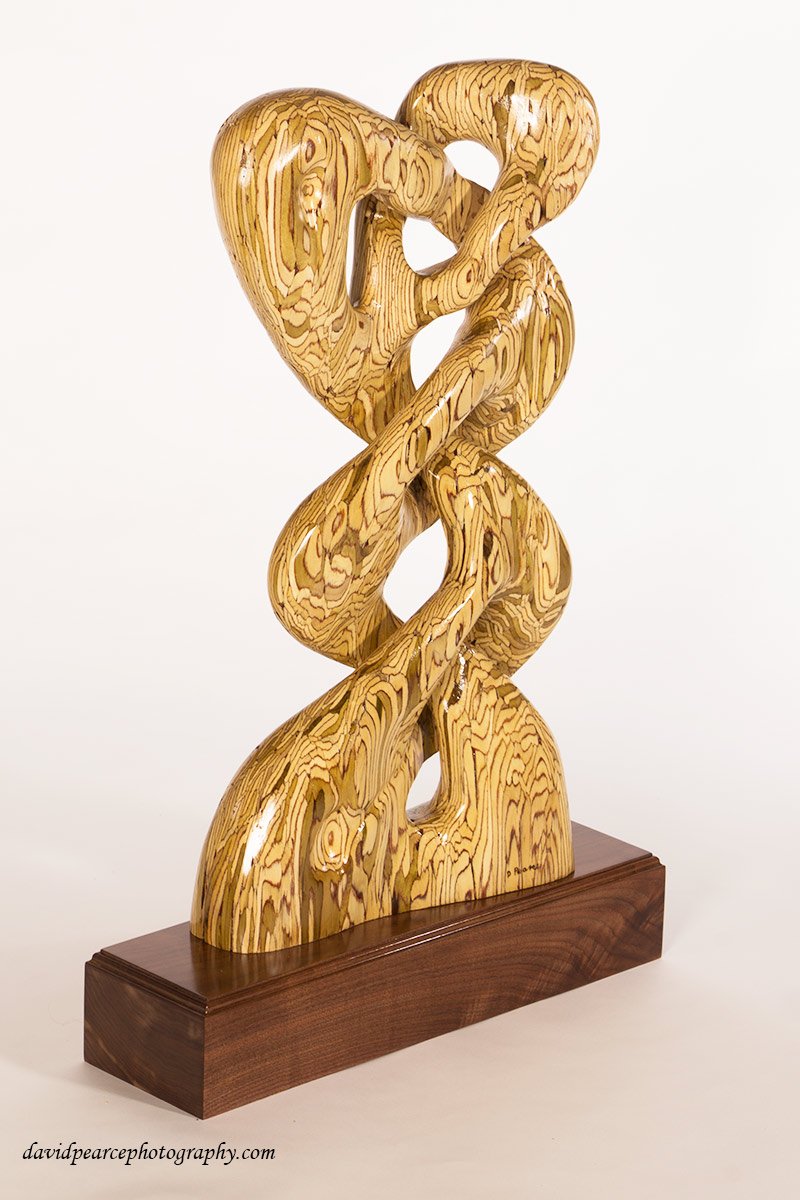
Weaving © David Pearce
ON DISPLAY
April 6 - May 28, 2026
RECEPTION
April 9 5:00-7:00
"Sculpture by David Pearce", a new exhibit at the Montgomery Museum of Art and History, features works in metal, clay, and wood. Pearce says, "Artists progress best when they work in multiple media." He also paints in oil and watercolor and carves eggs.
Pearce employs the direct metal sculpture technique, where the metal is shaped rather than cast in a mold. He particularly favors copper due to its malleability and the ability to develop a patina. His artistic inspirations include Alexander (Sandy) Calder and Henri Matisse. Pearce creates mobiles that hang from the ceiling and smaller pieces that are mounted on clay or driftwood for tabletop display.
Many of the works in this collection are crafted from wood, with some pieces being as thin as 1/16 of an inch. The intricate carvings are executed using dental bits made of carbide or diamond, which are air-driven at speeds ranging from 1,000 to 400,000 revolutions per minute. In most of his sculptures, Pearce deliberately de-emphasizes the head to encourage viewers to observe the entire shape of the piece. Humans are naturally drawn to the head when presented with a defined face, so Pearce creates abstract heads to break this natural tendency.
Pearce must also be a fan of Mondrian, as his round wooden vase titled “Homage to Piet Mondrian” showcases Mondrian’s iconic primary colors and black lines at right angles. Inside the vase, at the bottom, he has used wood burning to produce a portrait of the renowned artist.
Some sculptures are adorned with color using an airbrush. The areas that are not to be colored are covered. Then, the airbrush is applied. This method can be repeated to add other colors. In certain cases, the airbrush can create a gradient of color, transitioning from vibrant to subtle. “Flames” is an excellent example of the use of color both inside and outside the vase.
“Weaving” was crafted from an intriguing material called Parallam, a beam of engineered wood. It’s made by taking long, thin strands of wood, typically Douglas fir or Southern pine, coating them with an adhesive, and curing them using microwaves. This material is strong enough for long-span beams and features an intriguing grain-like pattern. To fully appreciate this sculpture, take the time to observe it from all angles. A significant amount of effort was invested in determining the shapes before the carving commenced.
In addition to the metal and wood sculptures, this collection also features clay works. Pearce’s interest in clay was sparked by a workshop with Christine Kosiba, a ceramic artist from Brevard, North Carolina. These clay pieces are hand-sculpted without molds and can be air-brushed with various colors.